Feed on
Posts
Comments

Smart Glasses

Blog post – Smart Glasses

Hi guys, this week I wanted to highlight a really cool piece of hardware that has just released today – it is the HoloLens 2. This is the latest high-end smart glasses from Microsoft and what is different about this
bit of kit is mixed realities (augmented and Virtual Reality). The product will retail for approximately $3500 and is available to ship this week directly from the Microsoft Store.

Side view of headgear lens on black background

Based on what I have seen– it has almost limitless applications and could end up becoming a game changer for individuals with disabilities by allowing them to do things their bodies may not allow. The HoloLens 2 in conjunction with the control devices allow the user to interact almost tactually with holographic content in almost natural and instinctually way! From my understanding, I will have a chance to demo this product at my next accessible technology conference later this month in Denver.
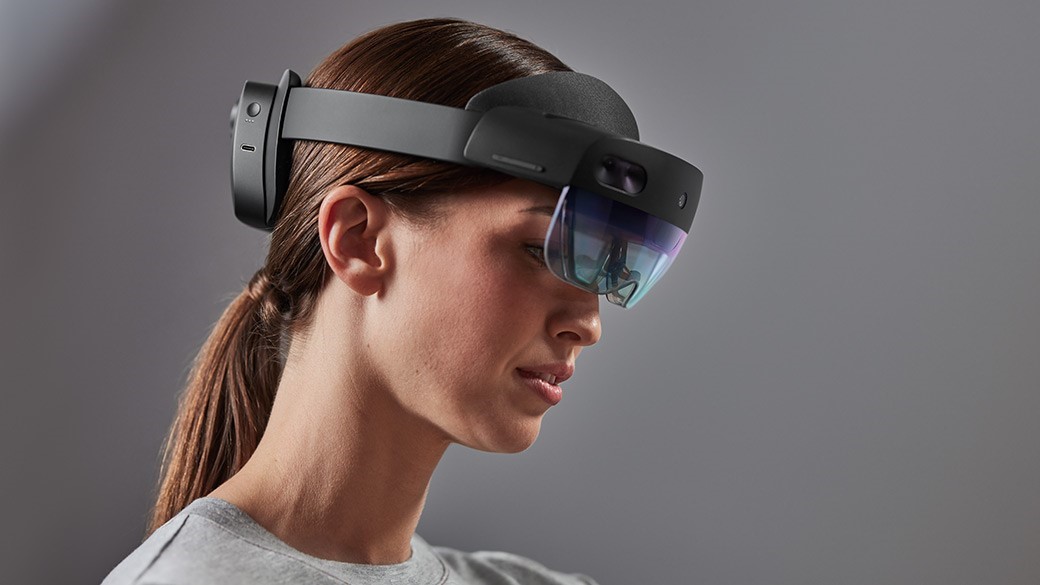
Woman wearing lens on head against gray background

The pricing for this device may be out of the reach for some consumers but the product is aimed at working professionals such as surgeons, engineers, scientists, designers, musicians, artists, composers and almost anyone that needs to visually interact with their work in a creative manner.  I envision this tool could helpful for individuals with gross motor challenges or those restricted to their home to immerse themselves in their work in alternative and augmentative manner.

I am really excited to see this product in person later this month!!!

Thanks for reading,

Andrew

To learn a lot more click this link


Tags:

Wow, MDTAP had the opportunity to participate in a fantastic event that focused on mobility and transportation for individuals with disabling conditions over at the Department of Transportation in Washington DC. We were welcomed and thoroughly enjoyed our time! MDTAP shared a table with our sister Virginia and Pennsylvania Tech Act programs. It was great to see the other Tech Act programs in-person and we all brought a variety of low and high tech devices to show off during the innovation event.

Front door of United States Dept of Transportation

I had the pleasure of showing off two awesome devices to summit attendees
primarily from the federal and district governments, respectively. The first device I showed off was the fantastic Victor Reader Trek. Which is a great audio player for individuals with low vision that read a ton of file formats. Another cool feature of the device is the GPS functionality so it can support independent travel for individuals with visual challenges.

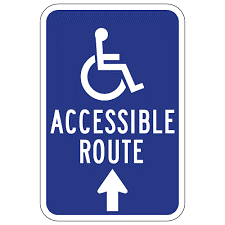
Blue sign with write writing "Accessible Route" with arrow

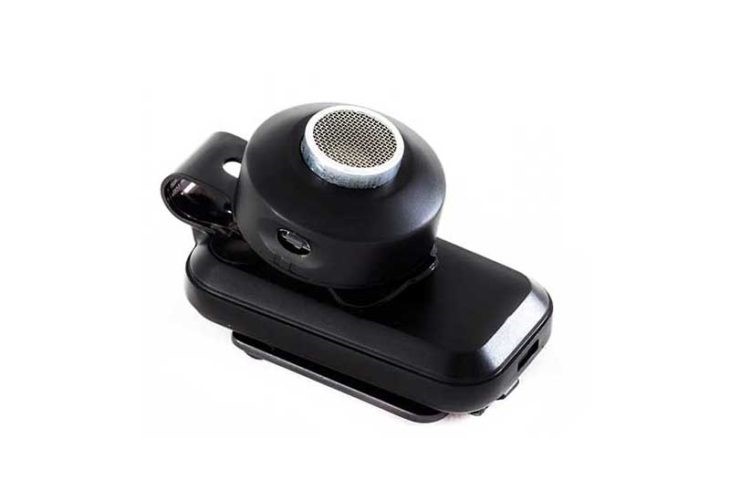
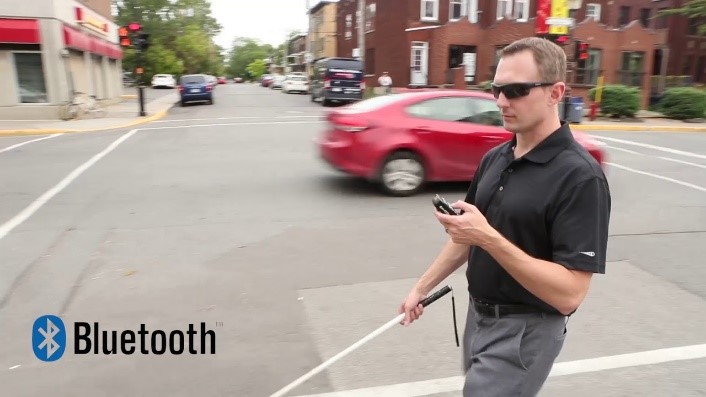
The second device I displayed was the Buzz clip; a mobility device that aids the movement of individuals with low vision and blindness. The device is a sensor that provides haptic feedback and aids with object detection.

Close up of small black device with silver knob.

This particular device hails from Canada and I was fortunate enough to meet the device’s creator earlier this year in California at the CSUN Accessibility Conference. What I love about the device is its simplicity and usability. I have received feedback that this device is helpful but it was noted that they hope the next version provides more directional haptic feedback so the wearer could determine the origin of the object in their path versus a non-directional tactile alert to an object.

Man holding device and white cane as he crosses street in crosswalk.

Thanks for reading,

Andrew

Tags: , ,

Otter.ai is one of the newest transcription apps on the market, and it’s impressing A LOT of people! Not only can the user access the transcription during live events, but it also includes features such as capturing business meeting transcripts, online transcript storage, and as-needed access of previous transcripts. The app can connect to your calendar, will provide automatic reminders to record meetings, and allows others to view and highlight the transcripts in real time. Otter.ai also offers the ability to easily separate and label different speakers in a single transcription.


The free version offers 600 minutes each month, and while the feature is great for quick chats and occasional meetings, the Premium version allows unlimited transcription services, making in-person and online meetings (it works with the Zoom meeting platform), conferences, lectures, and classes far more accessible to those who are deaf/hard of hearing. This is also a great accommodation tool for businesses needing to provide a reasonable way to share speech in real-time text format.


To learn more about Otter.ai and its creator, check out this New York Times article

Card Games

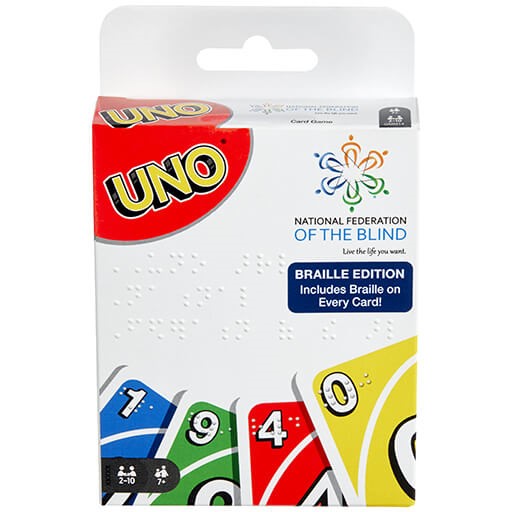
Here at MDTAP, we always like a good game and that includes the classic card game UNO!  Recently, the game’s manufacturer ‘Mattel’ has launched an adapted version of the card game that is accessible for individuals with blindness.  Mattel has partnered with our friends at the National Federation for the Blind to create a new edition of their popular UNO card game.  This new edition features embossed braille on traditional cards therefore making the game accessible for those with visual impairment and those without sight challenges. 

Close up picture of UNO packaging that has NFB logo in upper right corner.

UNO Braille also works in conjunction with Amazon Alexa or Google Home to launch UNO Braille.  The smart home device will then provide an audible tutorial how to play the game.  The tutorial is interactive, so you can ask questions as they walk you through the game directions step-by-step!  I hope that other card games begin to follow suit and create Braille editions of their products and potentially include audible guides using Google Home or Amazon Alexa, too.

Text cloud with UNO and NFB logos.

If you are visually impaired or have a visually impaired friend that reads braille this would be a nice gift so you can both play a fun card game together!  I see this being a great holiday gift as we start to approach the holiday season.

Thanks for reading,

Andrew

This week’s blog post on digital accessibility is focusing on how artificial intelligence can impact and improve digital accessibility for individuals with disabilities.  What is artificial intelligence? Artificial intelligence (AI) also known as machine intelligence is intelligence demonstrated by a machine (Poole, et al., (1998). 

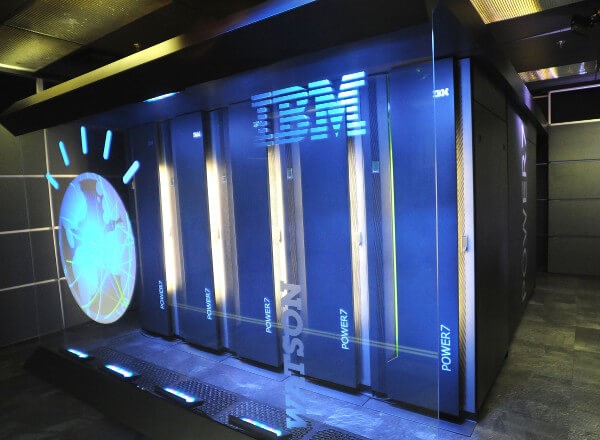
Blue-lit wall of IBM Watson

(A picture of Watson by IBM).

The most readily identifiable AI on the planet is probably Watson by IBM.  A super computer that has true artificial intelligence and has been used on  a variety of tasks including ones that would not normally be able to be completed by a machine.  Watson is not only capable of AI but is constantly learning new things.   Through the power of Watson it is completed by extraordinary challenges such as beating the best chess players on the planet.

A cartoon style picture of a gentleman with a cane being assisted by a robot across the street

Artificial intelligence is already being utilized to support the sensory impaired, namely the deaf/HOH community and those in our community with blindness.  In the United Kingdom (UK), Her Majesty’s government requires that websites meet success criteria level AA of the WCAG.  The actual requirement for sign language provision is an AAA requirement based on the WCAG success criteria so it is exceptionally difficult for most websites to meet this standard.  Especially, as sign language would be needed for all multimedia and this is where artificial intelligence could be utilized to potentially view, assess and then translate the media into sign language in almost real-time to the website user with who is deaf/HOH.

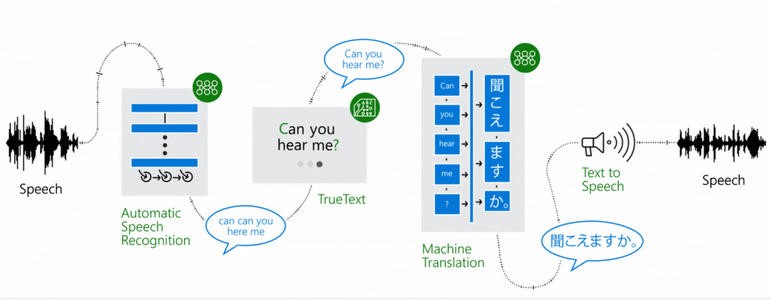
An infographic on AI by Micosoft that explains how AI work with speech translation and captioning.

Currently, AI is being utilized by Microsoft in the form of a free service through the Microsoft Translator application where spoken word can be translated into a variety of languages including the provision of text (captions).  In one of my prior roles for the State of Maryland I utilized this very tool when working with members of the deaf community.  It allowed me to get my message to the individual with a hearing impairment when an interpreter was not available at that exact time.  I could speak my message and it real-time captioned my words for the consumer to review.

Finally, based on the current and growing use of AI in the world, I foresee the power of AI being a part of many future accessibility blog posts! 


Poole, DavidMackworth, AlanGoebel, Randy (1998). Computational Intelligence: A Logical Approach. New York: Oxford University Press. ISBN 978-0-19-510270-3.

The Escape of Gaming

This week’s blog post is focused on my favorite pastime –gaming and in particular accessible gaming.  A great article was written by the folks from the Washington Post which highlights the benefits of gaming for those with disabilities.  Here at MDTAP, we also love some gaming and we are hoping to have another accessible gaming night in 2020 after the success of our first gaming night during this past summer!

Young man in wheelchair playing video game connected to tv on wall. Black background with flowers and cat in two windows.

A beautiful illustration by Matt Saunders of the Washington Post (we do not own the rights to this image but we love Matt’s work)

https://www.washingtonpost.com/video-games/2019/10/14/its-my-escape-how-video-games-help-people-cope-with-disabilities/

One very powerful platform that was highlighted in the article was streaming and how streaming video gaming seems to aid with social inclusion.  Many streamers who have massive followings on streaming platforms are in fact individuals with disabilities. 

I hope you all enjoyed this article as much as I did.  Our friends at AbleGamers were again highlighted for their fantastic work!  They do so much wonderful work locally and nationally in the support of inclusive gaming. 

« Newer Posts - Older Posts »

MDTAP | 2301 Argonne Drive, Room T17 Baltimore, Maryland 21218| Voice: 410-554-9230 Toll Free ⁄ Voice 1-800-832-4827|Email: mdtap@mdtap.org