Feed on
Posts
Comments

Ovis by ForwardX

Hi guys, what a super cool post I have you all today, I am excited to introduce to you the Ovis by ForwardX.  Ovis is a very cool bit of technology, a robotic and autonomous (self-driving) suitcase available for consumers in Asia and now the U.S. market.Man in black suit walks in airport with silver suitcase next to him.  He is not touching suitcase.

To see a demo video click the hyperlink below:  https://vod.300hu.com/4c1f7a6atransbjngwcloud1oss/47b82f42227456354649382913/v.f30.mp4?dockingId=4160c3dd-bfd0-4c6c-9441-dacae6f67ae1&storageSource=3

Ovis is available in the US market for $799 for a medium-sized suitcase that will reportedly hold about 5-7 days’ worth of clothing.  Ideal for business or personal travel.  The smart suitcase will follow the owner (side-by-side and not behind them) through well paved streets, airports, train stations, ports and even avoid people or stationary obstacles while maintaining a close proximity to the owner.  Ovis will not crash into the owner or get in the way of the owner’s walking path.  I believe this would be an excellent device for individuals with low vision and/or physical disabilities.  I know my own sister (a wheelchair user) has struggled in the past navigating airports with even a small suitcase, independently due to the hustle and bustle of the airport environment and the physicality of pushing her wheelchair whilst juggling a suitcase.  Based on what I have learned so far about Ovis I think it would be an excellent option for those with physical disabilities or dexterity challenges that make managing a traditional suitcase problematic.  If you like the looks of this case, please leave a comment, below!

Thanks for reading,

Andrew Drummond
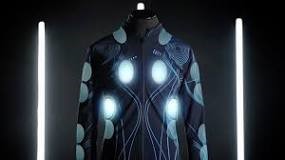
Black turtleneck long sleeve shirt with gray patches and lines on it. 4 patches are illuminated.

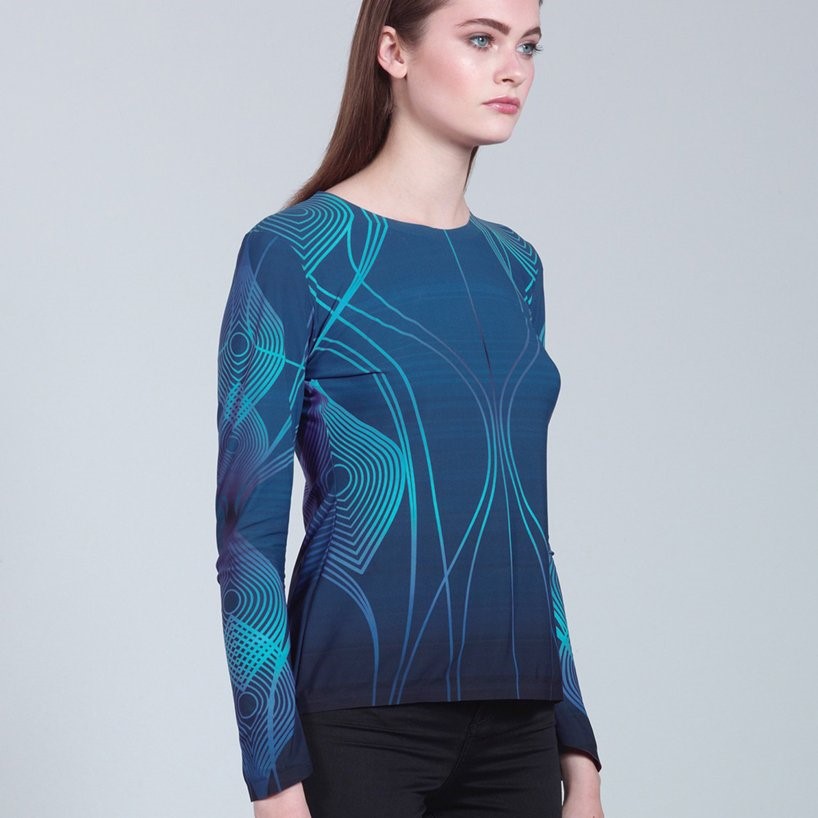
This week I wanted to share out a product from my home (the United Kingdom).  The Sound Shirt is a wearable haptic device that has been designed for deaf and hard of hearing people to feel the music.  The device is made by Cute Circuit based in London. This particular shirt features 30 micro-actuators embedded in the shirt and these sensors translate the sound in real-time, tactually based on the unique to each piece of music being performed.   

Woman wearing blue long sleeve shirt with lighter blue lines running on sleeves and body.

To learn more about the sound shirt please click the next link.  https://www.designboom.com/technology/cute-circuit-deaf-people-feel-music-skin-soundshirt-haptic-sensors-10-04-2019/


Thanks for reading,


Andrew

BBC Scotland Article

Hi guys,

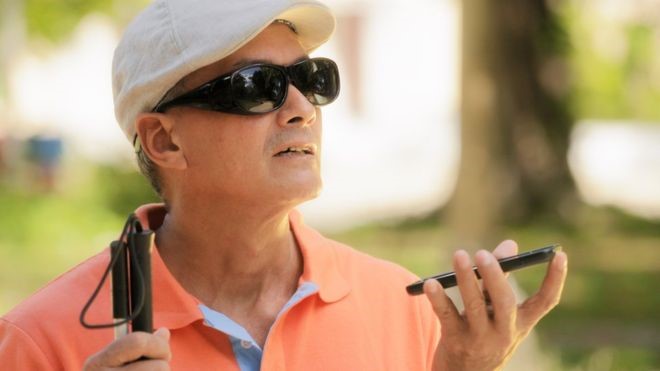
After reading, a great article this past week from the BBC on how smart tech could transform the lives of people with disabilities. The original article originates from my ‘neck of the woods,’ Scotland and discusses how smartphones and other devices have created a layer of convenience for individuals with disabilities.

Man in hat is outside wearing dark glasses holding phone in one hand and cane in the other.

Photo credit – Getty Images

To review the article utilize this link and you will be sent over to the BBC Scotland article. I hope you enjoy the article as much as I did! Based on 2019, I am super excited to see what is ahead for accessible technology for 2020!

Thanks for reading,

Andrew

Credit: Sandy Murray, BBC Scotland.

Accessible Kiosks

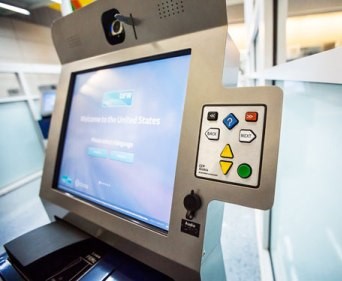
Close up of Kiosk screen

A picture of a kiosk made by Storm Interface

Hello guys, this blog post is focusing on IT accessibility–to be exact electronic kiosks.  We are surrounded by a variety of electronic kiosks in our workplaces, colleges, libraries and in our community in general.  So if we are surrounded by electronic kiosks – it is of course absolutely vital that all electronic kiosks are accessible to all users especially those with sensory impairments.  Many kiosks are critical to our daily lives including buying train tickets, finding out when the next movie starts at the movie theater or even re-entering the USA after a visit abroad.

Airplanes at gates at airport.

A picture of several Aer Lingus aircraft standing at Dublin International Airport

 The machine pictured at the top of this post is very similar to the device used by US Customs and Border Protection (CBP) as a means of providing and gathering data at Pre-Clearance locations like the one I visited recently in Dublin, Ireland.  It is very exciting to see that federal agencies are being mindful of universal access and accessibility when procuring electronic kiosks.  I did happen to notice that the CBP have installed kiosks with built-in accessibility features so that individuals with disabilities can have access to the same technology without the need for a human ‘helper/assistant.’

Vispero, an assistive technology (AT) manufacturer for the visually impaired and blind, has partnered with Storm Interface to combine the technologies within JAWS (Job Access with Speech) screen reading software with Storm’s accessible products to create an accessible kiosk experience for individuals with blindness, visual impairment and dexterity challenges.  The new kiosks will auto-start JAWS after headphones have been inserted into the machine and then a series of ‘routines’ will occur to make the system almost instantly accessible to non-visual users.  I am really excited to see the first Vispero and JAWS kiosk in-person – I will definitely add a new blog post when I get my hands on it!!!

Thanks for reading and talk soon,

Andrew


Happy New Year!  Today, I wanted to share out a little more on digital accessibility and in particular using commonly available tools test websites for accessibility.  Digital accessibility is a hot topic in the world today with many recent high profile cases making it all the way to the United States Supreme. Guys, I am super excited to introduce a tool from WAVE; it is their web accessibility checking tool.  

WAVE logo green circle with cursive w in it.

WAVE was developed and has been made available as a free assessment tool by WebAim at Utah State University.  This tool was launched back in 2001, the WAVE website notes that it has been used to evaluate the accessibility of millions of web pages.  WAVE is a pragmatic tool that can allow web developers, content managers and interested parties to determine the accessibility for a single webpage (at a time).  

screenshot of wave app with summary page showing errors, alerts, features, structural elements all color coded

WAVE allows the user to easily detect a range of accessibility challenges.  Automated accessibility testing is able to detect approximately 30-33% of all accessibility errors in any given webpage.  The industry standard best practice is to utilize automated testing in combination with getting your ‘hands dirty’ and manually test a webpage for accessibility to ensure accessibility.  To learn more about using WAVE as an accessibility evaluation tool, I would recommend you attend one of our upcoming web accessibility webinars in 2020!

Thanks for reading,

Andrew

Tags:

Time Magazine Inventions: WeWalk Smart Cane 

Cartoon of man and robot crossing street. Man is holding cane.

Hi guys, this week’s blog post shifts from digital accessibility to assistive technology.  One of the most popular publications on the planet – Time Magazine has featured several AT devices this year in their top 100 inventions of 2019.  The WeWalk smart cane was one of those fantastic and innovative solutions.  WeWalk was designed by Kursat Ceylan, who happens to be blind to overcome one of his activities of daily living – mobility in the world around him.

Close up of woman holding Smart Cane in right hand while standing in crosswalk.

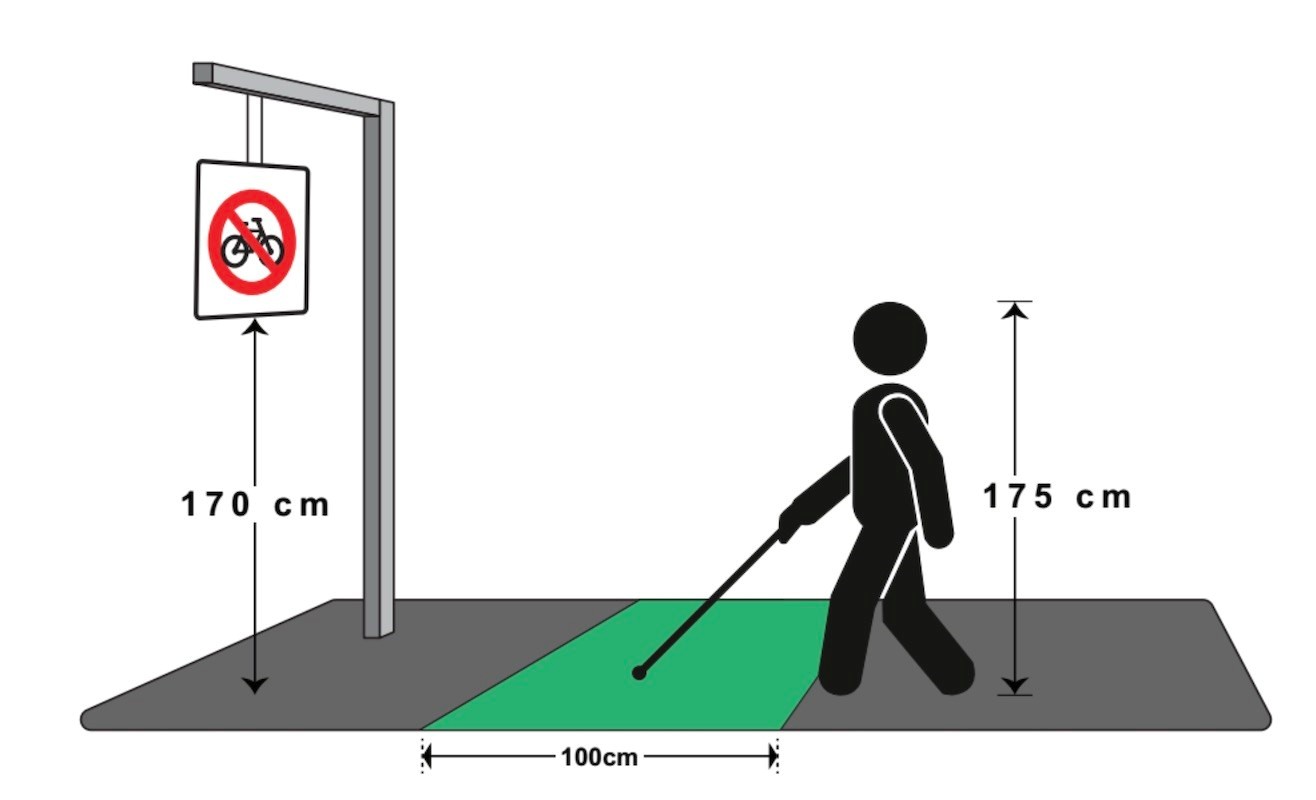
The origin of the device came when one day, Kursat was heading to his hotel using a smartphone map app, his traditional white and pulling his luggage, when he walked into a metal pole injuring his forehead.  After this event, he co-developed the WeWalk smart cane to aid other visually impaired and blind people navigate their environment more safely than using a cane while simultenously utilizing a smartphone for spoken directions.  The WeWalk provides object detection above chest level (up to 1.7 m in height), and pairs with several GPS maps including Google Maps.  The device currently retails for just under $500.  WeWalk’s object detection is quite different from other devices due to the height of object detection which is ideal for detecting low hanging branches and sign poles.

Drawing of Man holding cane, with dimensions outlined of his height (175cm), distance in front of him (100 cm) and height to object in front (170 cm)

To learn more about WeWalk head to their website linked here

Thank you for reading,

Andrew

« Newer Posts - Older Posts »

MDTAP | 2301 Argonne Drive, Room T17 Baltimore, Maryland 21218| Voice: 410-554-9230 Toll Free ⁄ Voice 1-800-832-4827|Email: mdtap@mdtap.org