Feed on
Posts
Comments

The Maryland Department of Health (MDH) wants to hear from you (and your friends and family) about what you consider are the most pressing health issues for Maryland residents!

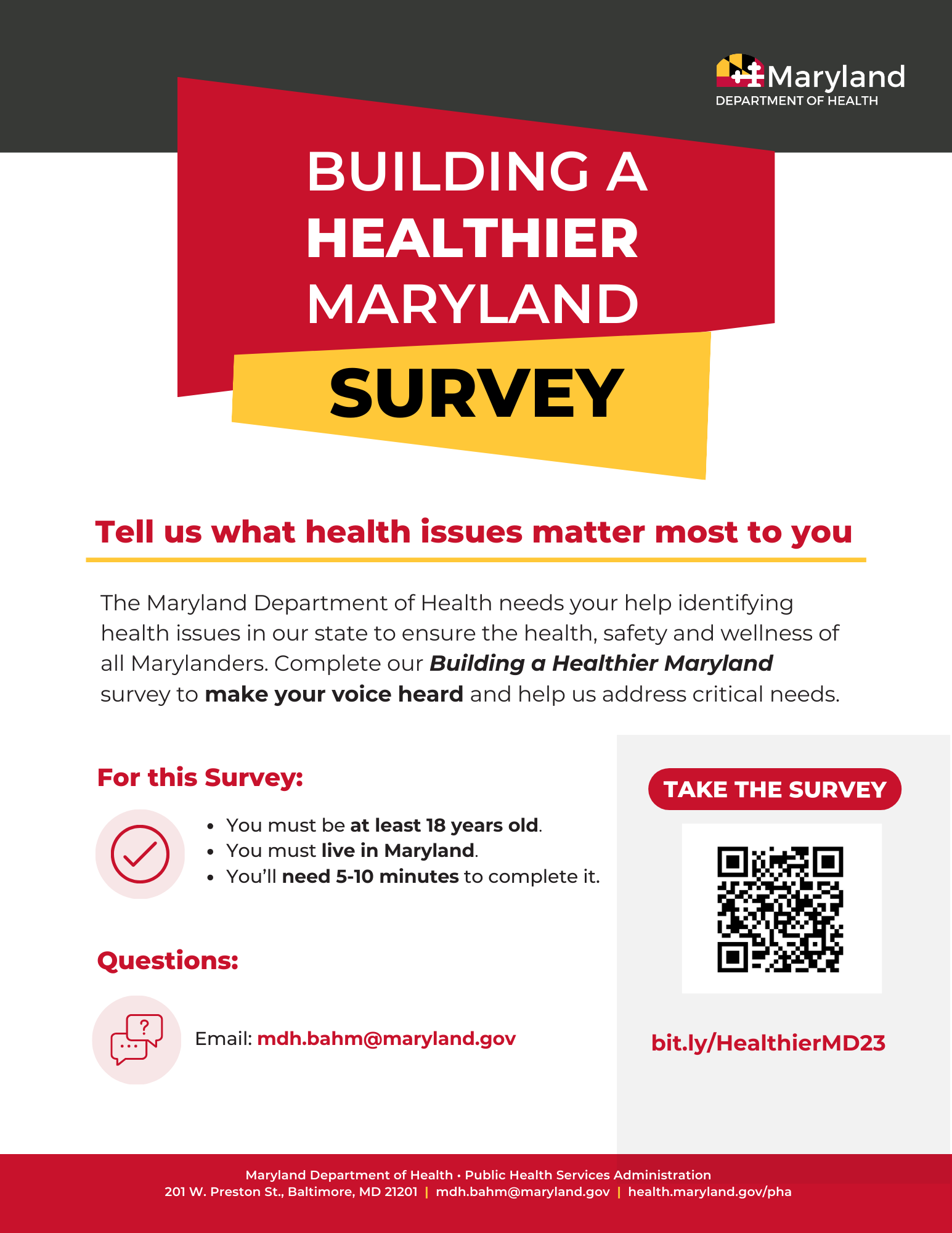
MDH has launched a collaborative initiative called “Building a Healthier Maryland” that is aimed at improving the health and well-being of all Maryland residents. Please complete a very brief survey so that your voice is heard. The survey is available in English, Spanish, Chinese, and Korean and is intended for any Maryland resident who is at least 18 years old. The survey closes on January 3, 2024.  

If you have any questions about Building a Healthier Maryland or about the survey, please send an email to MDH.BAHM@maryland.gov

To be eligible you must be: 

-Maryland resident

-18 years of age or older

Survey Closes: January 3, 2024

Languages: Available in English, Spanish, Chinese and Korean
TAKE THE SURVEY

BAHM Survey Flyer with QR code to survey link

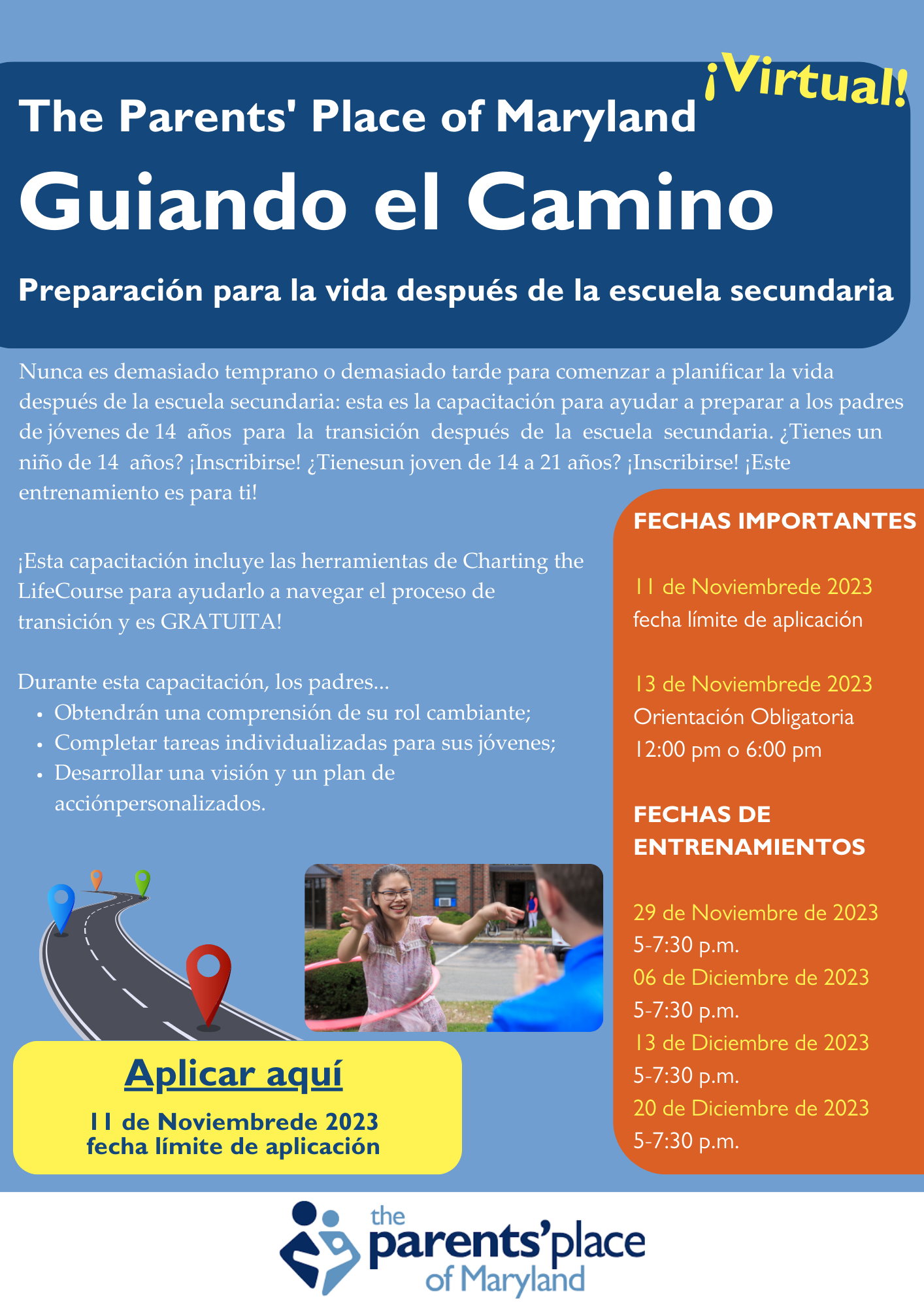
Guiando el Camino

Parents Place of Maryland Logo

¿Tienes un niño de 14 años? ¡Inscribirse! ¿Tienes un joven de 14 a 21 años? ¡Inscribirse! ¡Este entrenamiento es para ti!


Durante esta capacitación, los padres…
· Obtendrán una comprensión de su rol cambiante;
· Completar tareas individualizadas para sus jóvenes;
· Desarrollar una visión y un plan de acción personalizados.


¡Date prisa y aplica antes del 11 de noviembre!

Mas informacion

Volantes Informacion

Contributed by Kristen Klepac 

Accidents happen all the time, but you may be surprised to hear that some of the most severe and even fatal accidents happen within the safety of our own homes. 


In fact, preventable home injuries and fatalities have increased by 320% since 1999 according to the CDC. And for those with disabilities, the risk of home hazards causing an accident is further elevated. Disabilities that affect mobility, vision, hearing, communication, or cognition can amplify the threat of certain home hazards.


The 10 most common causes of fatalities and injures in the home are: 

  1. Poisonings
  2. Falls
  3. Choking
  4. Drowning
  5. Fire
  6. Cuts
  7. Suffocation
  8. Strangulation
  9. Carbon Monoxide
  10. Burns


Being prepared is one of the most important steps in preventing these types of home accidents. While there are many physical modifications that can be made in the home, proper safety planning and prevention practices can further help you avoid such accidents. 


For those living with a disability or with someone who has a disability, here are some tips for staying safe from the most common home hazards:

  • Develop a safety plan, especially for emergency situations like a fire, cut, or burn.
  • Consider installing security cameras in your home.
  • Regularly test safety home detectors and ensure fire extinguishers are operable. 
  • Create rules for the storage of potentially dangerous items related to poisoning dangers, choking, and cuts. This is particularly important for households with children. 


Check out the full Resource Guide to Home Hazards to learn more specific details about preventing each of the most common 10 home hazards to keep you and your loved ones safe.


The Navigator Center helps 18-24 year-old city residents apply to college or begin a new career through the workforce development programs. The center provides guidance for those who graduate from high school and seek career support in the early years of young adulthood. Click here to learn more!

In September 2023, COVID-19 vaccines began being sold in stores. But don’t worry, most people in the U.S. can still get these vaccines for free if they have health insurance, including Medicare and Medicaid. However, around 25-30 million adults don’t have health insurance, and some people with insurance might have to pay for the COVID-19 vaccine. If this is you, it may be difficult to access the COVID-19 vaccine!

To help, there’s something called the CDC’s Bridge Access Program. It’s like a temporary way to get the COVID-19 vaccine for free. Any adult who is 18 years old or older and doesn’t have health insurance or has insurance that doesn’t cover the vaccine can use this program. The CDC’s Bridge Access Program works with health departments and health centers to give out the vaccine for free. They also have deals with CVS, Walgreens, and eTrueNorth to give out the vaccine at no cost. If you want to find a place to get the vaccine for free through this program, you can go to vaccines.gov.

Support Mental Health Parity

Take Action Now!

The National Federation of Families is asking you to take action to support the strengthening of rules for

 Mental Health Parity and Addiction Equity Act.


What’s Happening?

The Biden Administration proposed new rules to advance parity – the basic idea that mental health condition and substance use care are covered at the same level of care for physical health conditions. Strengthening the existing regulations is critical to holding health plans accountable, helping Americans get needed care, and decreasing the enormous health care and social costs of under-treated mental health and addiction.


How You Can Take Action?

Now, the public has a chance to comment on the proposal. The number of comments MATTER. Please help us tell the federal government how important it is to ensure equal treatment for mental health and substance use care by insurance plans by submitting a comment on the proposed updates to the enforcement rules. The comment period is open until October the 17th

The National Federation of Families, and its key parity partners, have provided a template for you to submit your support. If you have a story to share, consider adding a few sentences to describe the challenges you have experienced.


You now have the opportunity to comment on the proposal. Make your voice heard today! #AcceptAdvocateAct

SUBMIT YOUR COMMENTS


« Newer Posts - Older Posts »

MDTAP | 2301 Argonne Drive, Room T17 Baltimore, Maryland 21218| Voice: 410-554-9230 Toll Free ⁄ Voice 1-800-832-4827|Email: mdtap@mdtap.org