Feed on
Posts
Comments

Happy Birthday, ADA!

Colorful banner reading “happy birthday”

Thirty-one years ago this week, President H.W. Bush signed the Americans with Disabilities Act (ADA) into law. Today the provisions incorporated in the ADA are more obtainable than ever before in history thanks to advancements in assistive technology (AT), the increasingly ubiquitous nature of AT in common devices, and a growing awareness about the power of technology to empower lives.

Signed into law on July 26, 1990, the ADA is a landmark piece of legislation that makes accessibility a civil right and ensures that all people with disabilities have equal access to goods and services, public accommodations, employment, transportation, and other areas of public life. 

Under the ADA’s Title I, advancements in assistive technology over the past three decades have made it even more advantageous for employers to hire individuals with disabilities.  Advances in the development of laptop computers and tablet devices, in adaptive computer innovations such as speech-to-text and text-to-speech, as well as a host of other devices and systems have made accommodating individuals with disabilities more affordable.  Many employers continue to report the accommodations they provide often cost nothing, such as widening aisles, come built-in to a computer operating system, or require a one-time expenditure of $500 or less. (Job Accommodation Network, JAN, survey.)

Under Title II, services provided through state and local governments have vastly improved program accessibility and equal access as a result of advancements in AT and accessible information technology.  These days, the requirements for effective communication with auxiliary aids and services can be anything from an assistive listening system in a courtroom to an on-line system for paying property taxes usable by residents who are blind. 

Assistive technology under Title III, Public Accommodations, such as ramps that allow individuals with a walker or wheelchair to access a store, restaurant, museum, or doctor’s office allow anyone wishing to purchase related goods and services equal access and are increasingly celebrated as Universal Design (accommodating durable medical equipment but also strollers for parents and childcare providers). More and more it is understood that good access is good business!

Under Title IV, Telecommunications, advancements in digital and website accessibility have advanced broadly and strides continue to be made although much more yet needs to be done.  A wide range of assistive technologies are now standard in our telephones and other connected devices providing a direct communication link between everyone regardless of ability.

State and Territory AT Act Programs anticipate technology advances will continue to support increased equity in employment, state and local governments, public accommodations, and telecommunications. In all areas, AT Act Programs assist individuals with disabilities, families, employers, educators, therapists, and service providers discover and explore a wide range of options so they may choose and decide what assistive technology will work for them.
Find your AT Act Program

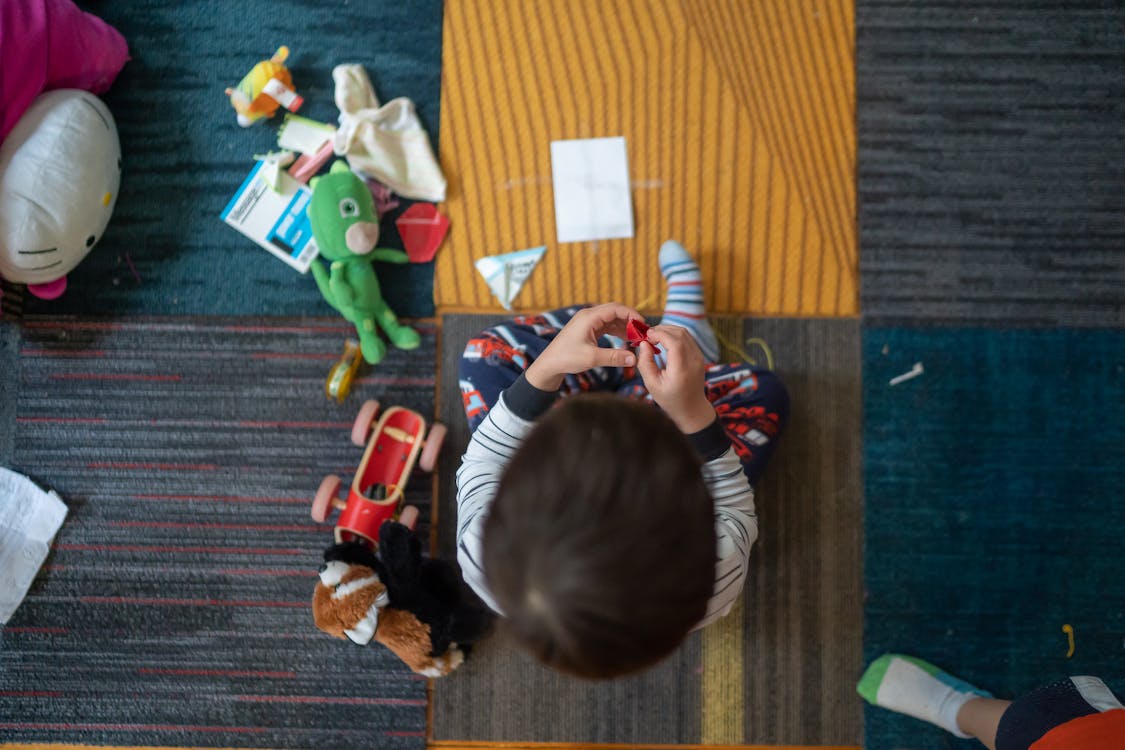
Equipment Connections for Children is hosting an Adaptive Toy Workshop this November! This workshop will teach health professionals and caregivers how to convert a toy requiring fine motor skills into an adaptive toy that children of any ability can operate, by demonstrating how to install a switch cable to a toy that can be used to plug in a variety of alternative switches, buttons, and and/or pressure pads. Participants will learn by adapting a toy provided by ECFC and will go home with the toy and the switch at the end of the session, a $100 value! Continuing Education Units are available for this workshop. 

The workshop will be held on Saturday, November 13, 2021 from 1 pm until 4 pm at ECFC’s new office space at 7125 Riverwood Drive D1, Columbia, Maryland.

Equipment Connections For Children is a small nonprofit serving Maryland, DC, and Northern Virginia by sourcing costly adaptive pediatric equipment, refurbishing that equipment, and then giving it to kids with disabilities who need it, free of charge. This semiannual event raises funds for ECFC’s programs and is a part of the Kids Connect Program that seeks to provide opportunities for learning and exploration for kids with disabilities, and community building and networking for their families.

Top-view Photography of Toddler Playing With Toy

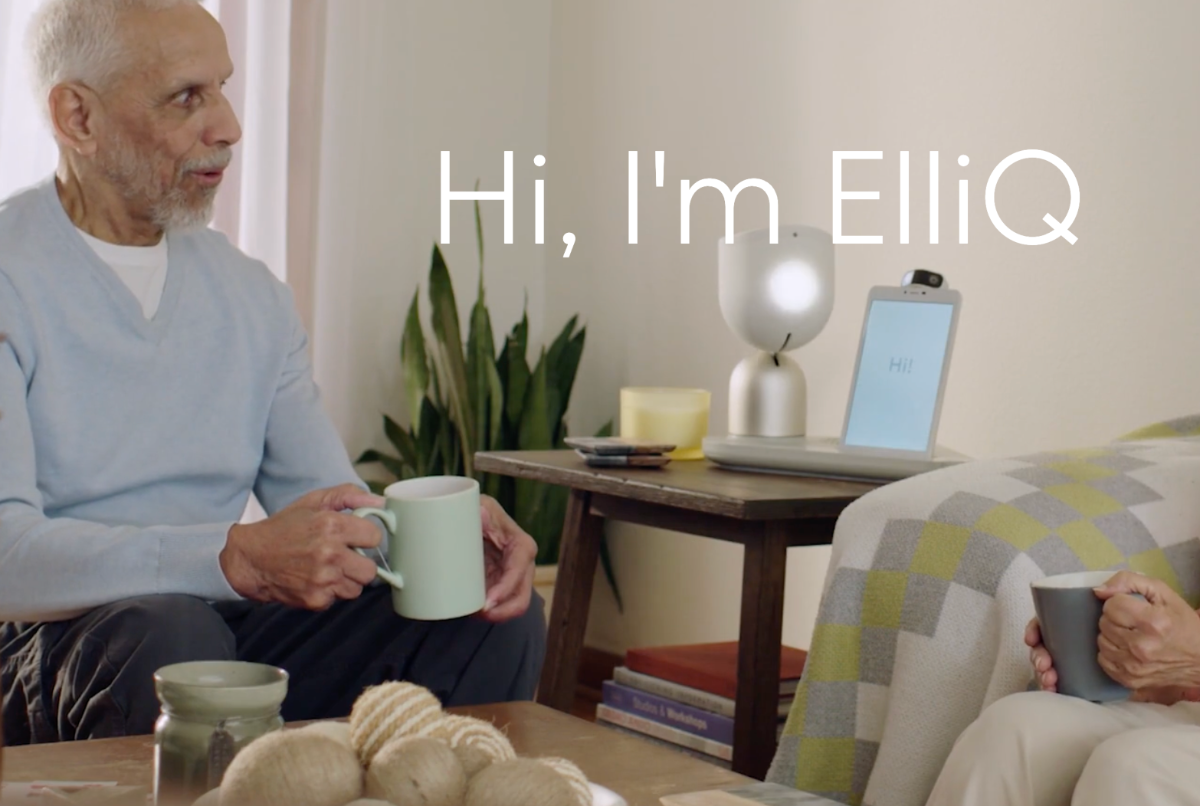
Get a Free ElliQ Robotic Companion With the ElliQ Care Program

ElliQ®, by Intuition Robotics, is a personal care companion, here to help you lead a healthier, happier lifestyle at home. ElliQ offers companionship, entertainment, tips and advice, answers to your questions, and much more.

How does the ElliQ Care Program work?

By participating in this program, you will receive a free ElliQ, access to a real-life wellness coach, and concierge services. Your wellness coach will suggest health tips, track your patterns, and bring any concerns to your attention (as they may arise) – to help you stay on track of your health and wellness goals. Your concierge will be at your disposal to assist you with all your day-to-day needs.

How can ElliQ help you?

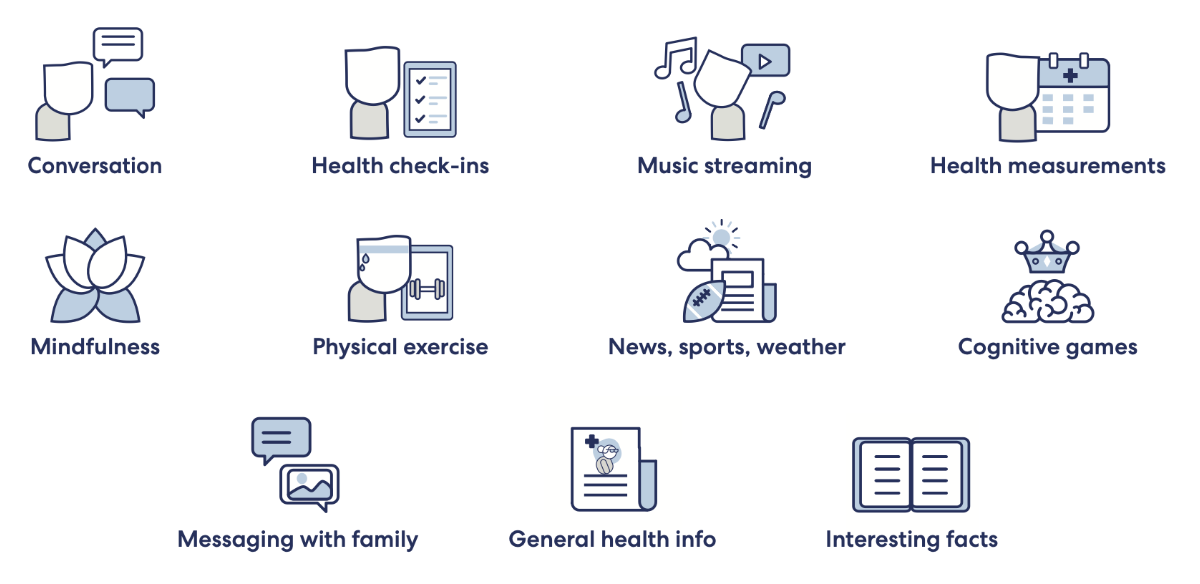
ElliQ was designed to empower older adults and people with disabilities to achieve maximum independence, and offers many useful activities to keep them healthy, thriving, and engaged at home.  Throughout the day, ElliQ will proactively engage and guide them through a variety of activities, including:

How will ElliQ evolve over time?

ElliQ will learn what you like and what you don’t like. Over time, based on your feedback and preferences, ElliQ will evolve to offer new features. As you use ElliQ, your coach may add or remove health and wellness goals, and ElliQ’s suggestions and behavior will adjust to help you achieve these new goals.

Click below to…

Sign Up Online 

or call: 1-888-230-2432


Seeking Donations & Volunteers
 
DONATE
Our High-tech AT Reuse Center (MATR) accepts donations of gently used assistive technologies such as adapted keyboards, CCTV’s, eye gaze systems, and more. If you have equipment you no longer need, contact us!
 
VOLUNTEER
We’re in need of volunteers to help us clean, repair, and prep donated electronics. If you have technical or mechanical experience and would like to volunteer either at our Columbia location or from home, please send us an email! 
 
CONTACT US

From students to professionals to friends in our community, digital documents are shared daily, and it is important for accessibility to be incorporated into the documents we create. Learn some of the basic but powerful techniques experts use every day to build accessibility into their documents. Join the National Federation of the Blind Center of Excellence in Nonvisual Accessibility on July 27, 2021 from 2:00-3:30 p.m. Eastern to learn how to make your documents accessible for all. Some topics that will be covered:

  • Word document accessibility
  • PowerPoint accessibility
  • PDF accessibility

Register today for this free opportunity

Accessibility boutiques and seminars are workshops presented by our access technology experts that provide introductions to accessibility best practices and the latest trends in access tech.

Governor Larry Hogan today, in conjunction with the Maryland Department of Disabilities, announced the release of the new Maryland State Disabilities Plan, a roadmap for changing the lives of Marylanders with disabilities for the better.

Read the Maryland State Disabilities Plan.

“Our state is committed to ensuring all Marylanders living with disabilities have the knowledge and influence to make a difference in their lives and the lives of others,” said Governor Hogan. “This plan will guide us there, and I want to commend Secretary Beatty and all those involved in preparing this bold and ambitious roadmap.”

The State Disabilities Plan provides for the coordination of those state services and policies that ensure compliance with state and federal civil rights laws, and will provide community-based supports, emergency preparedness, housing, transportation, employment, health care, accessible technology, education, and family support to Marylanders with disabilities. The plan also provides a framework for delivering, monitoring, and striving to improve these services. Progress is measured annually by the Maryland Department of Disabilities.

“The pandemic has had a tremendous impact on the lives of Marylanders with disabilities,” said Secretary Carol A. Beatty of the Maryland Department of Disabilities. “This plan builds on lessons learned and will improve and enhance our state’s service delivery systems.”

The State Disabilities Plan is developed quadrennially by the Interagency Disabilities Board, which is composed of cabinet secretaries of key state agencies and is chaired by the Secretary of Disabilities. The board is charged with producing recommendations, assessing funding and service needs for individuals with disabilities, identifying performance measures, and working with the Secretary of Disabilities to create a seamless, effective, and coordinated delivery system.

The plan has five guiding principles: self-direction, financial well-being, accessible communication, maximizing resources, and health and wellness. The health and wellness guiding principle was added as a result of the COVID-19 pandemic.

« Newer Posts - Older Posts »

MDTAP | 2301 Argonne Drive, Room T17 Baltimore, Maryland 21218| Voice: 410-554-9230 Toll Free ⁄ Voice 1-800-832-4827|Email: mdtap@mdtap.org